
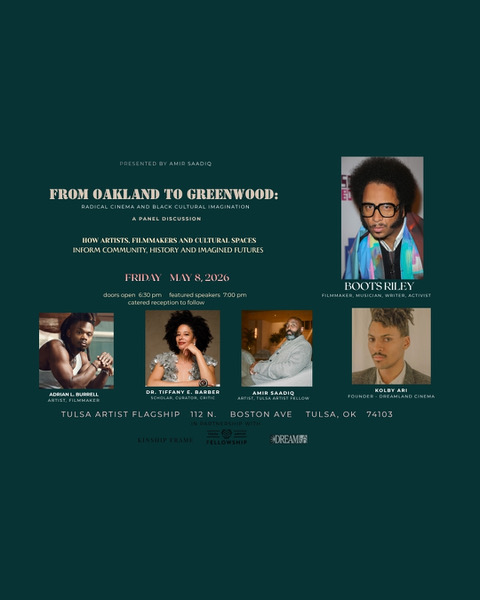
From Oakland to Greenwood: Radical Cinema and Black Cultural Imagination
Midnite weekend screenings happen on Friday & Saturday nights,. so please be sure to arrive on Friday and/or Saturday night by 11:45pm for seating and the screening will start after midnight.
Run Time: 180 min.
Program presented by Amir Saadiq and Tulsa Artist Fellowship in partnership with Dreamland and Kinship Frame
In conjunction with the Dreamland Theater’s screening of I Love Boosters, this panel
discussion brings together artists and cultural practitioners to explore the role of radical
cinema in shaping Black cultural imagination across time and place. Drawing
connections between Oakland and Tulsa’s historic Greenwood District—two places
shaped by powerful histories of Black cultural production, political struggle, and artistic
innovation—the conversation will examine how artists engage with sites of storytelling,
critique, and future-building.
Friday, May 8 | 7-9 PM
Tulsa Artist Fellowship Flagship
112 N. Boston Ave, Tulsa, OK 74133
Schedule:
6:30 PM | Doors Open
7 – 8 pm | Panel Discussion, Q + A
8 pm | Dinner + Drinks
GUEST SPEAKERS
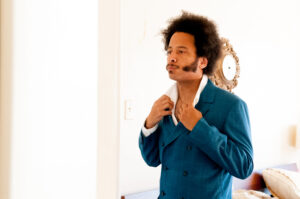
Boots Riley is a filmmaker, musician, and activist whose work is closely connected to social justice. Riley first gained recognition as the lead vocalist of the hip-hop groups The Coup and Street Sweeper Social Club, using his music to address systemic inequality and promote collective action. He transitioned to filmmaking with the debut feature “Sorry to Bother You,” a satirical fantasy that premiered at Sundance Film Festival and received critical acclaim for its originality and social commentary. Riley’s directorial debut earned the Independent Spirit Award for Best First Feature, along with nominations from the Directors Guild of America and several critics’ associations, highlighting his influence in independent cinema. He later created the Amazon Prime series “I’m a Virgo,” which received a Gotham Award nomination and four Independent Spirit Award nominations.
Riley is known for blending humor, magical realism, and political insight in his storytelling, contributing to ongoing conversations in film and television about race, class, and power. In addition to his creative work, Riley has played a leadership role in grassroots movements such as Occupy Oakland and The Young Comrades. He is also the author of the published work “Tell Homeland Security—We Are The Bomb.” Riley’s career is characterized by a commitment to challenging the status quo, and he is frequently invited to speak at festivals and universities, where he connects art with activism and engages audiences on topics related to film, music, and social change.
His latest film, “I Love Boosters,” premiered at SXSW and has been praised for its bold, anti-capitalist satire. The film will have its Oklahoma premiere in Tulsa on Saturday, May 9, presented by Dreamland Theater and Tulsa Film Collective as part of the Kinship Frame film series.
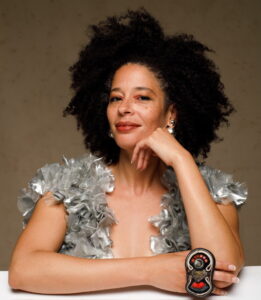
Dr. Tiffany E. Barber is an award-winning scholar, curator, and critic whose work reshapes how we understand race, gender, and representation. A sought-after voice in contemporary art, culture, and fashion, her expert commentary spans academic journals, museum exhibitions, acclaimed documentaries, and major media outlets like The Nation, Huffington Post, Frieze, and Tate Etc. Currently Assistant Professor of African American Art at UCLA, Dr. Barber’s unique blend of art history, performance theory, and Black feminist thought inspires diverse audiences and institutions to advance new cultural futures. Her accolades include the Smithsonian’s National Portrait Gallery Director’s Essay Prize; leadership roles at the International Journal of Surrealism, the Delaware Contemporary, the College Board, and the Black Speculative Arts Movement; and numerous fellowships. Her path-breaking exhibitions have been featured in Essence, The Brooklyn Rail, Surface Magazine, and Google Arts and Culture. Her debut monograph, Undesirability and Her Sisters: Black Women’s Visual Work and the Ethics of Representation (NYU Press, 2025), cements her reputation as a leading tastemaker and thinker of this generation.

Adrian L. Burrell is an Oakland artist and filmmaker whose practice examines the intersections of race, class, and intergenerational dynamics. His work has been exhibited at ICA San Jose and Minnesota Street Foundation (USA), the FORMAT Photography Festival (UK), Lagos Photo Festival (Nigeria and the Republic of Benin), and featured in The New Yorker and the BlackStar Film Festival. His works are held in the permanent collections of the SanFrancisco Museum of Modern Art (SFMOMA) and the Crocker Art Museum. Burrell is a past resident of Black Rock, Senegal. He represented the USA in the Dakar biennale and is a recipient of the Kenneth Rainin Foundation grant(USA).
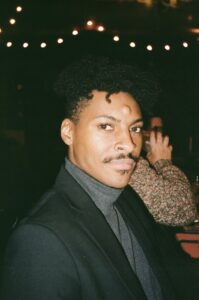
Kolby Ari is a Tulsa-based film programmer, urban design advocate, and journalist dedicated to cultural preservation and social repair. He is the founder of Dreamland, a social cinema initiative inspired by the historic Williams Dreamland Theatre of the Greenwood District, which focuses on rebuilding community through film, conversation, and centering Black and Indigenous storytelling. He is a frequent contributor to industry discussions on independent exhibitions, including sessions at SXSW, IND/EX, and has served on the board for Art House Convergence.
ABOUT THE HOST
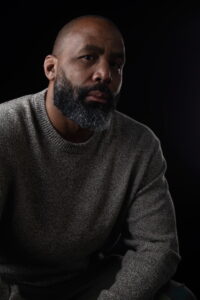
Amir Saadiq is a multidisciplinary artist working across photography, film, and installation. His research-driven practice examines Black life, memory, and the afterlives of historical violence, often using landscape and absence to question how visibility and subjectivity are constructed under conditions of erasure. Grounded in critical fabulation and Black studies, his work situates personal reflection within broader historical and cultural frameworks. Saadiq’s ongoing project Brother Don’t Sing is a multidisciplinary body of work that combines self-portraiture, moving image, and installation. Drawing inspiration from Ralph Ellison’s Invisible Man, the project explores the tension between presence and disappearance through indirect representations of the body. Brother Don’t Sing examines nonlinear temporality and how memory is shaped by silence, displacement, and return. Saadiq holds an MFA from the University of California, San Diego, a BA from Howard University, and is an alum of the Skowhegan School of Painting and Sculpture. He is a recipient of the Tulsa Artist Fellowship, where he continues to develop Brother Don’t Sing through sustained, place-based research. Alongside his studio practice, Saadiq is an educator whose teaching extends his commitment to critical inquiry, reflection, and storytelling.
About Dreamland
Dreamland itself takes its name from the historic Black-owned theater established in 1914 in Tulsa’s Greenwood District. Built by John and Loula Williams, the original Dreamland Theater was a vital community institution before its destruction during the 1921 Tulsa Race Massacre. Today, Dreamland operates as an exhibition platform led by Tulsa curator Kolby Ari in collaboration with descendants of the Williams family, centering Black and Indigenous perspectives in joy, healing, liberation, and transformation. Through screenings and programming across various venues, Dreamland invites audiences to imagine new possibilities for community and shared futures.
About Kinship Frame
Kinship Frame is an intersectional third space centered on moving image and storytelling, rooted in Black and Indigenous community in Tulsa, Oklahoma. In partnership with Dreamland, the initiative seeks to amplify and foreground the deep
histories and contemporary connections of Afro-Indigenous, Black, Freedmen of the Five Tribes, and Native peoples living at the intersections of the Osage, Muscogee, and Cherokee Nations and Tulsa’s historic Greenwood District.
About Burning Cedar Sovereign Wellness
Burning Cedar Sovereign Wellness is a 100% Native women-led, Tulsa-based non-profit dedicated to restoring wellness through Indigenous ways of knowing. They combat intergenerational trauma and cultural disconnection by providing community spaces, educational workshops, and ancestral foodways to empower urban Indigenous individuals.
About Tulsa Artist Fellowship
Established in 2015, Tulsa Artist Fellowship was created as a place-based initiative by the George Kaiser Family Foundation (GKFF) that addresses pressing challenges faced by contemporary artists and arts workers living in and joining Tulsa, Oklahoma. Tulsa Artist Fellowship believes the arts are critical to advancing cultural citizenship and supports community-invested practitioners who intentionally engage with our city.
Visitor Experience
Tulsa Artist Fellowship – Flagship accommodates wheelchairs and strollers. Variable seating is provided, along with areas for distanced standing and wheelchairs. Family-scale private washrooms are available to support visitors with disabilities and caregivers who need access to increased square footage and changing tables. Tulsa Artist Fellowship strives to provide a welcoming and accessible experience. All exhibitions and events are free, documented, and archived.